Evolvia — Personal AI OS & Multi-Agent Platform
Autonomous multi-agent orchestration operating under strict architectural playbooks.
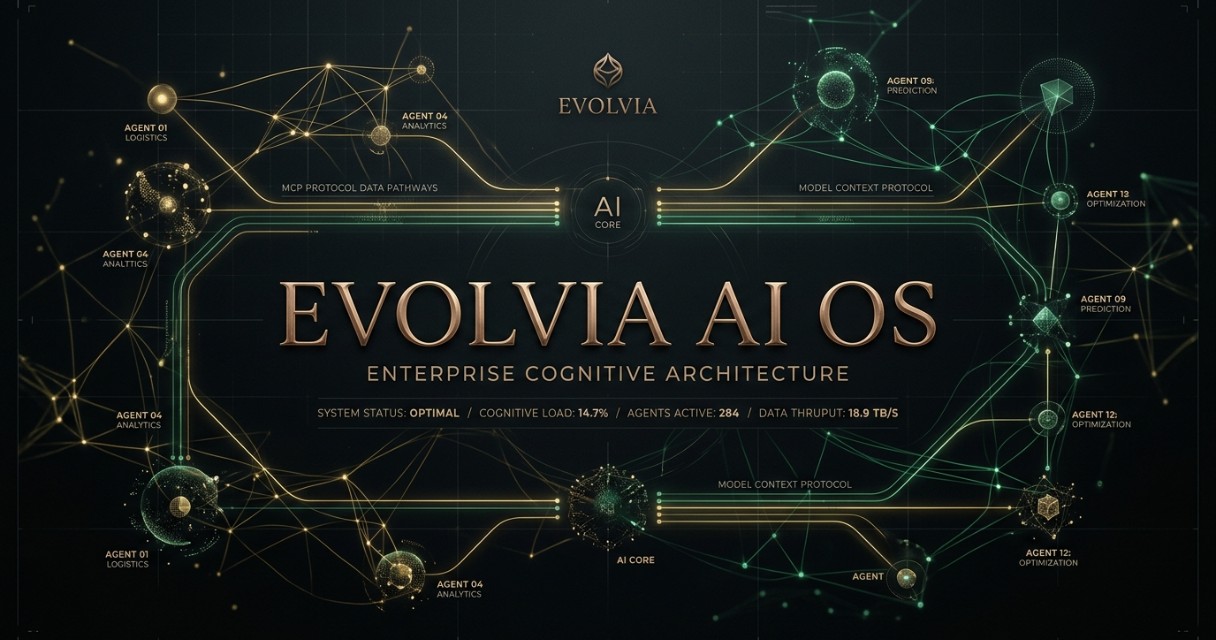
Architected a Personal Life Operating System powered by autonomous multi-agent orchestration. Operating with Claude Code CLI, custom subagents, and Model Context Protocol (MCP), Evolvia enables AI agents to plan, execute, and verify tasks against strict operating manuals (AGENTS.md, CLAUDE.md) with sandbox safety and token discipline.
Autonomous coding agents frequently suffer from hallucinated dependencies, schema drift, and context-window degradation when executing multi-step complex tasks without strict operational boundaries.
Engineered comprehensive agent operational playbooks and release gates, enabling autonomous task decomposition (GSD mode) with deterministic verification test harnesses and isolated context spaces.
Engineered comprehensive agent operational playbooks and release gates, enabling autonomous task decomposition (GSD mode) with deterministic verification and zero hallucinated schema drifts.
- ◆Authored exhaustive AGENTS.md & CLAUDE.md operating manuals defining agent roles, permission boundaries, and quality gates.
- ◆Configured Model Context Protocol (MCP) servers for isolated file operations, PostgreSQL schema inspection, and Playwright verification.
- ◆Integrated Subagents (Architecture, DB Administrator, QA Bot) for segregated responsibility and context-window optimization.
- ◆Established token budgeting and LiteLLM model routing to balance execution latency against reasoning costs.

Mifos Fineract — Core Banking Platform
Stock Exchange Operations Platform
JLPT National Registration System
Multi-Platform Scraping & Analytics Platform
CrossMart — Cross-Border Marketplace